Shopify integration

Shopify is the source of truth for orders. ROASfinity reads orders, products and customers and uses them for MER, CAC and CPA.

Stock photos and example labels, not customers.

How the data moves

From Shopify to your report. Back only with a yes.

The top row is reading, which is all a new connection does. The bottom row is writing, switched on per account only after you grant the rights.

  1. ShopifyReads orders, refunds and cancellations
  2. 🔑Token vaultRead-only token, encrypted on the server
  3. One recordStored per client, with currency and time zone kept
  4. ▦Your reportSource, formula and sync time on every number
  5. ✎ProposalA change such as: products, media, content and discounts, according to the scopes you grant
  6. ✓Preview and yesBefore and after, then a person with the right role approves
  7. ⎙Written onceAn idempotency key, so a retry cannot repeat the change
  8. ↻Read back, loggedShopify is read again, compared and logged
Read: on by default, read-onlyWrite: off until you grant it, then every change needs approval

Shopify in daily use

01

What it reads first

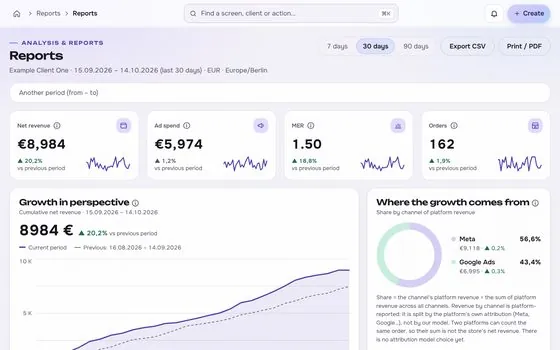
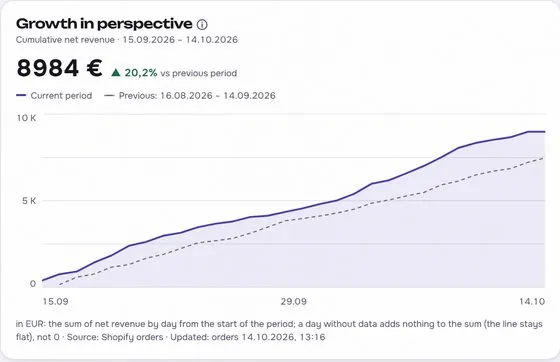
Orders, refunds and cancellations

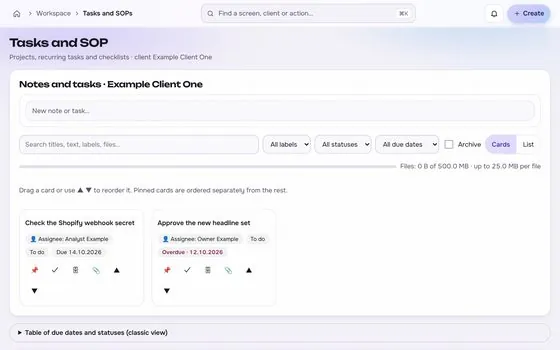
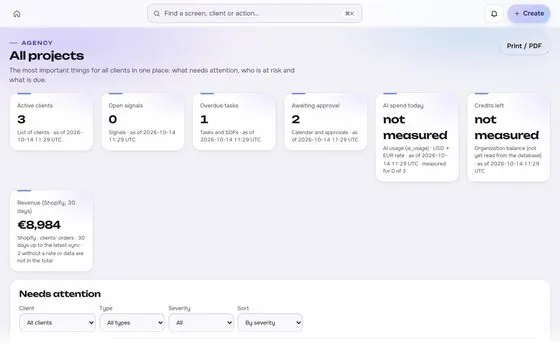
What it reads first, shown on an app screen with test data
02

What it can change, after a yes

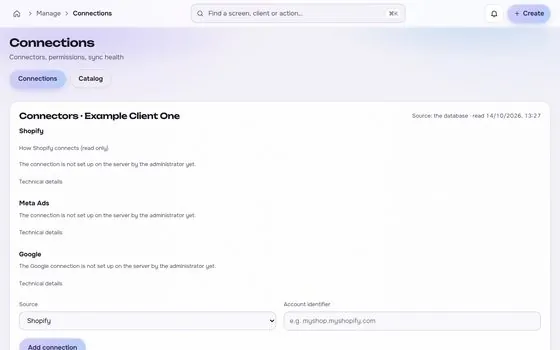
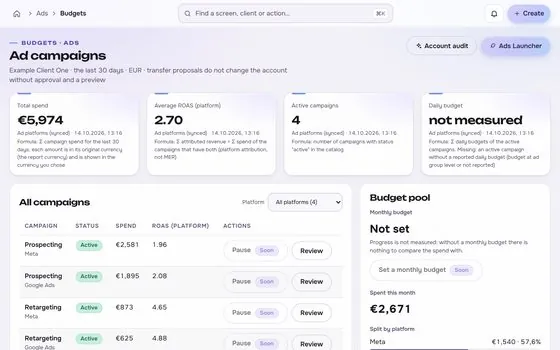
Products, media, content and discounts, according to the scopes you grant

What it can change, after a yes, shown on an app screen with test data

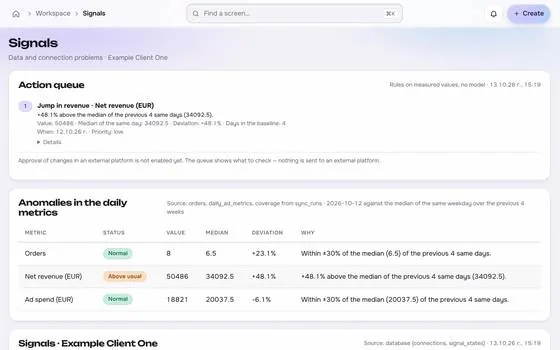
Photos are stock images. App screens show test data.

In numbers

4things it reads
1things it can change, after approval
2things you need to connect
1limits stated

Shopify: reads, writes and limits

  • Orders, refunds and cancellations
  • Products and inventory
  • Customers, for new customer counts
  • Webhooks where available
  • Products, media, content and discounts, according to the scopes you grant

Always after preview and approval.

  • App install with OAuth and the scopes you approve
  • Orders older than 60 days require extra access from Shopify
  • GraphQL Admin API is rate limited by query cost, so backfills use bulk operations and an adaptive queue.

Before you connect

Your ticks stay in this browser only.

Common data differences

General practice, not a claim about any one account.

Difference

Order time versus payment time

A store can record a sale when the order is placed, when the payment clears, or when it ships. An ad platform records a purchase at the time of its own event. An order placed late on one day and paid the next can land in two different weeks. Pick one definition and use it in every report.

Difference

Refunds and cancellations on a later day

A refund or cancellation usually lands on the day it happens, not on the day of the original order. A weekly report can show the sale in one week and the refund in another. Label each revenue figure as gross or net before you compare it with anything else.

Difference

Time zone and currency of each source

The store, the ad accounts and the reporting tool can each use a different time zone and currency. A day cut at midnight in one zone is a different day in another. Converted amounts rarely match to the cent, so expect small gaps.


Questions about Shopify

Is the Shopify connection read-only?

It starts read-only. Changes are added only where the platform grants the permission, and each one is previewed, approved, sent once, read back and logged.

Where is the token stored?

In an encrypted vault on the server, never in the browser, in logs or in an AI prompt.

Is the Shopify connector available now?

Not yet. It goes live after the platform access is in place. Request access to be told when it does.

Built for shop owners, creators and agencies. Stock photos, not customers.

Run the next client review from one screen.

We open one agency at a time, with your own accounts connected read-only first.

Request access

How we plan to price it