01
Dry run first
See what will be created, how many operations it takes and what each ad will be called before anything is sent.
Build a matrix of product, variant, copy, format and audience. Check naming, UTMs and sizes, preview the number of operations, upload paused and read the result back.
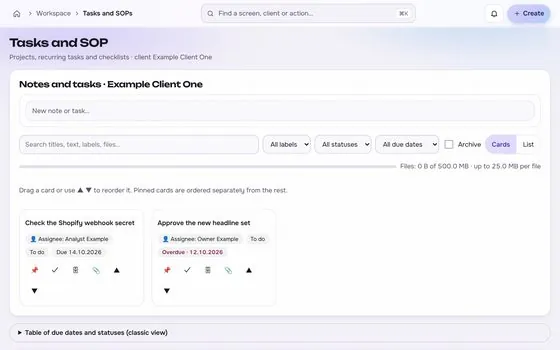
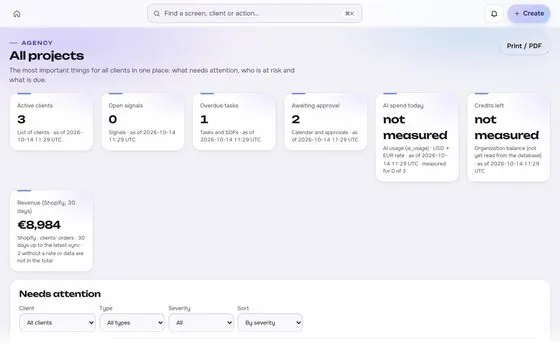
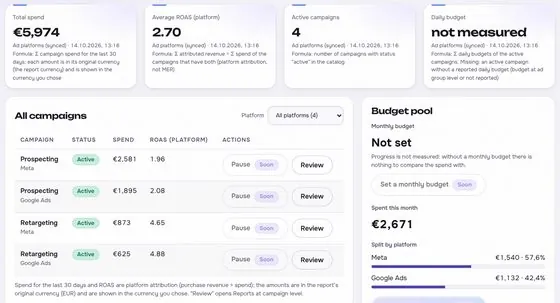
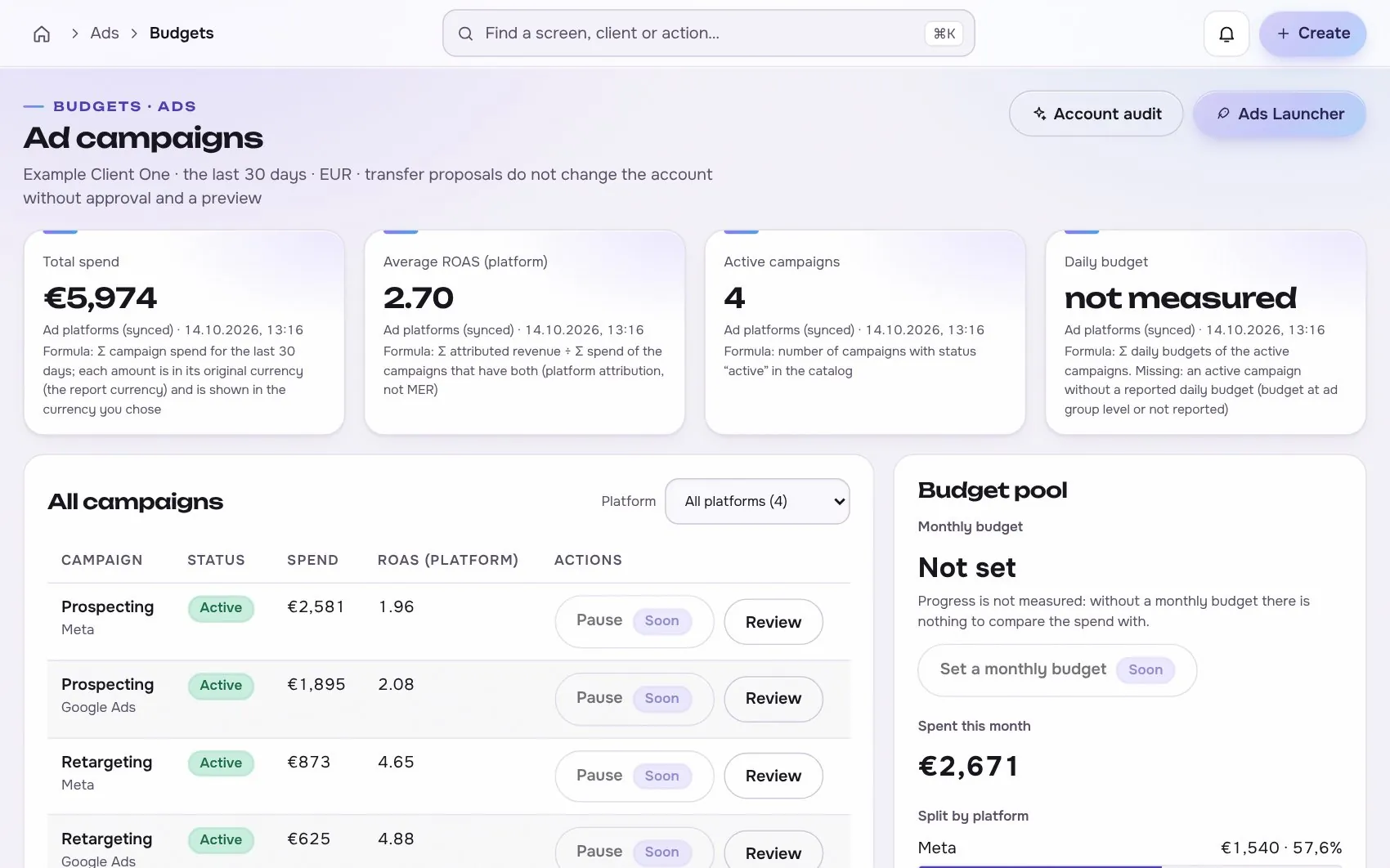
Floating cards and figures are examples on sample data, not a customer account.
One of four areas of the product, sharing the same client record, roles and log.
See what will be created, how many operations it takes and what each ad will be called before anything is sent.
Ads are created paused and compared with the draft by reading them back from the platform.
A report shows which of forty succeeded. Retrying only the failed ones never duplicates ads that already exist.
Connections start read-only. Writing is switched on per account, only after you grant the rights.


Lines draw as you scroll. Platforms on the left are read-only first, Ad launcher sits on the one client record, and each output keeps its receipt.
Meta AdsBuiltShopifyBuiltSources are read first, the numbers are stored once per client, and every output shows its source, formula and update time.
The same four moves apply to every module in this area.
From first connection to the number a client sees.
Choose products, creatives, copy, formats and audiences.
Naming template, UTMs, landing URLs and file sizes are checked.

An approver sees the exact diff. The send carries an idempotency key.
The platform state is compared to the draft and written to the log.
Photos are stock images that show the kind of business this is built for. They are examples, not customers.




Stock photos and example labels, not customers.
Connections are read-only first and go live only after the platform access is approved.
Built: the connector exists in the product and goes live per account once access is granted. Planned: not built yet.
Teams often use tools such as Madgicx for this. Our comparison pages are drafts being verified.
Modules that share this client record, these roles and this log.