 Meta Ads
 TikTok Adsplanned
 Google Ads
 Shopify
 WooCommerceplanned
 GA4
GA4 WordPress
 HubSpotplanned
 Mailchimp
01
Search where the client lives
Files are found by client, with previews and permissions respected.
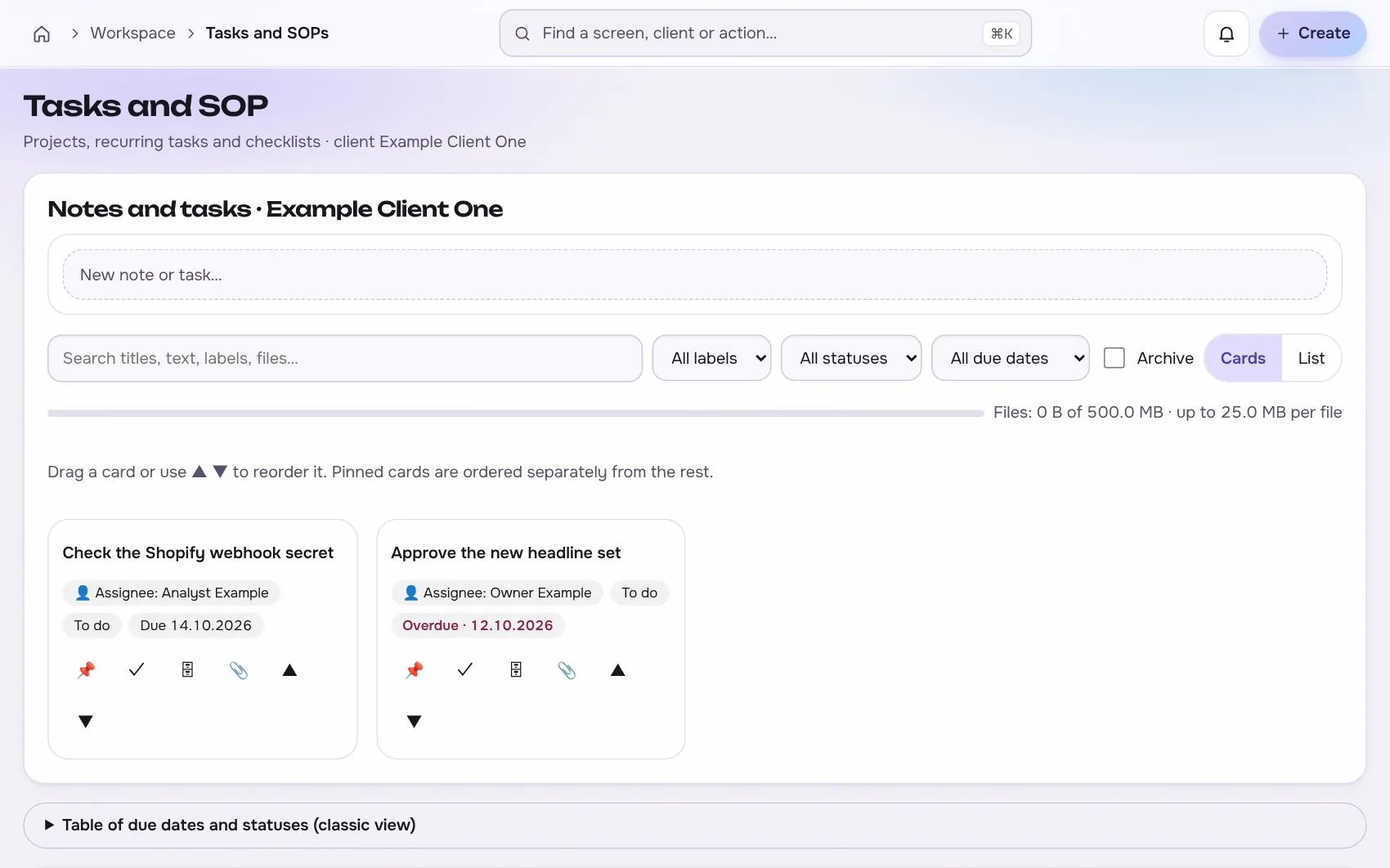
Find the right file, preview it, read the sheet and make permitted edits without leaving the client. Every save is checked against the document afterwards.
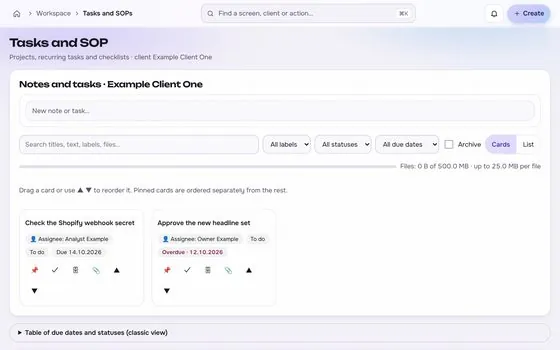
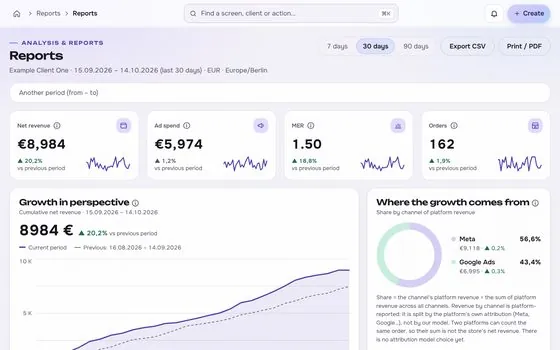
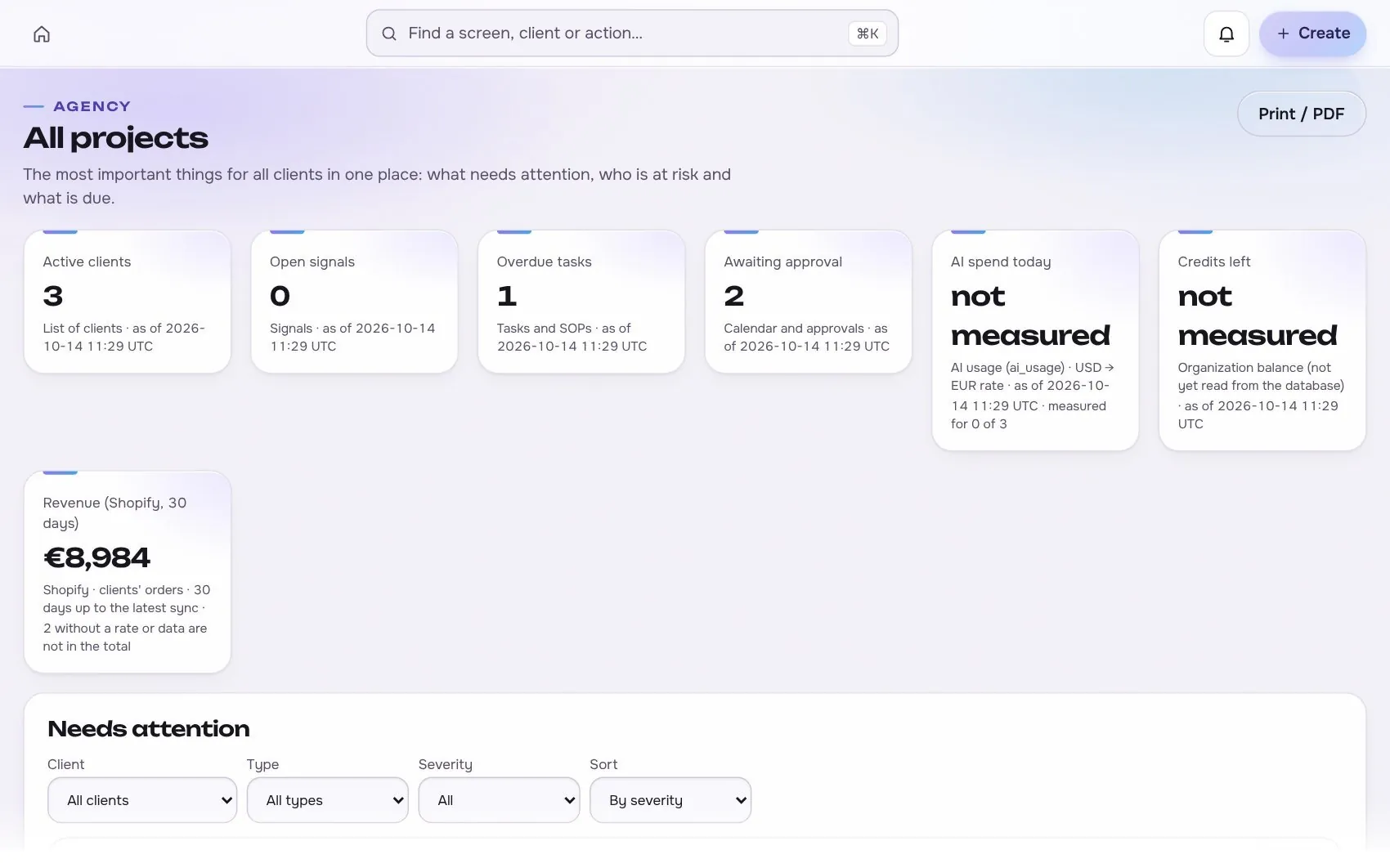
Floating cards and figures are examples on sample data, not a customer account.
Each connector starts read-only. Built ones light up here, planned ones stay dim until they exist.
One of four areas of the product, sharing the same client record, roles and log.
Files are found by client, with previews and permissions respected.
After a write the document is read again to confirm it matches the change.
Revisions and simultaneous edits are handled, not overwritten.
Connections start read-only. Writing is switched on per account, only after you grant the rights.

Lines draw as you scroll. Platforms on the left are read-only first, Workspace sits on the one client record, and each output keeps its receipt.
Google WorkspaceRead-only firstSources are read first, the numbers are stored once per client, and every output shows its source, formula and update time.
The same four moves apply to every module in this area.
From first connection to the number a client sees.
Google OAuth with the smallest scopes that work.
Search Drive and open Docs and Sheets in context.

Make a permitted change through the Docs and Sheets APIs.
The saved result is read back and logged.
Photos are stock images that show the kind of business this is built for. They are examples, not customers.




Stock photos and example labels, not customers.
Connections are read-only first and go live only after the platform access is approved.
Built: the connector exists in the product and goes live per account once access is granted. Planned: not built yet.
No single tool replaces this module; it connects work that is usually split across several.
Modules that share this client record, these roles and this log.